
On-page SEO services
On-Page SEO Services That Make Every Page Earn Its Place
We match each important page to the search it should win, then improve the title, headings, copy, internal links and media so people and search engines understand it immediately.

Intent mapped to pages

Titles, headings & copy

Internal linking

Measured page by page

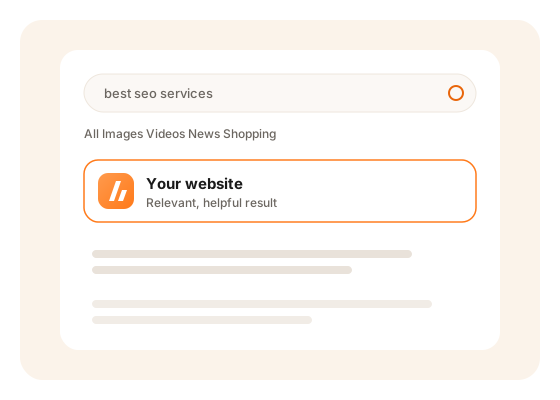
What is on-page SEO?
Improve the Pages You Already Have
On-page SEO covers everything on the page itself: what it is about, how clearly that is expressed in titles and headings, whether the content actually answers the searcher’s question, and how the page connects to the rest of your site.
It is usually the fastest place to find wins, because you are improving pages that already exist and already have some visibility — not starting from zero.
What’s included
Our On-Page SEO Services
Focused work on the pages that matter most to your revenue.
Search intent mapping
Assign one primary search intent to each priority page so pages stop competing with each other.
Title tags & meta descriptions
Write titles that describe the page accurately and descriptions that earn the click — following Google’s title-link and snippet guidance.
Headings & content structure
Restructure headings and sections so the main answer is easy to find, then fill gaps competitors cover and you don’t.

Copy improvements
Tighten vague copy, add missing specifics (process, scope, pricing factors, FAQs) and remove repetition.

Internal linking
Link related pages with descriptive anchor text so authority and readers flow to the pages that convert.

Images & media
Descriptive file names, useful alt text, correct sizing and compression for faster pages.
Our process
Our On-Page SEO Process
Page by page, ordered by business impact.
01
Select pages
Pick the pages closest to revenue, using Search Console data where available.
02
Map intent
Confirm what searchers want by reviewing the current results.
03
Rewrite & restructure
Improve titles, headings, copy, links and media.
04
Implement
Publish changes in your CMS or hand over ready-to-paste copy.
05
Measure
Compare impressions, clicks and conversions before and after.
Deliverables
What You Receive
Every recommendation is written for your actual pages — no generic checklists.
- Page-to-intent map for priority pages
- New titles and meta descriptions
- Rewritten or restructured page sections
- Internal link plan with suggested anchors
- Image and media fixes
- Before/after measurement notes
What we don’t do
- Keyword stuffing or ‘keyword density’ targets
- Hidden text or doorway pages
- Rewrites that change legal or regulated claims without your review
- Promises of specific rankings
How on-page SEO work is prioritized
On-page SEO is most effective when it starts with the pages closest to revenue — service, product and category pages that already receive impressions — and fixes the mismatch between what those pages say and what searchers are looking for.
Rather than auditing every page equally, we rank pages using the data you already have. In Google Search Console, pages with many impressions but a low click-through rate often have titles or snippets that don’t match the query. Pages that rank on page two for important queries often need better depth or clearer structure. Pages with traffic but few enquiries usually need better calls to action or more convincing detail.
| Signal | Likely issue | Typical on-page fix |
|---|---|---|
| High impressions, low clicks | Title or snippet doesn’t match intent | Rewrite the title and meta description; make the page’s main promise explicit |
| Ranking for the wrong query | Page intent is unclear or overlaps another page | Re-map intent; consolidate or differentiate competing pages |
| Positions 8–20 for core terms | Page is thinner or less clear than competitors | Add missing sections, examples and specifics; improve structure |
| Traffic but few enquiries | Weak conversion path | Clarify scope, process and next step; add relevant proof you actually have |
| Important page with few internal links | Hard for users and crawlers to reach | Add contextual links from related pages and navigation |
Titles, meta descriptions and headings
Google generates title links mainly from the <title> element but may use other text on the page when the title is missing, repetitive or doesn’t describe the page well. That is why we write titles that are specific to each page, avoid boilerplate repetition and keep the most important words early. Google’s guidance on influencing title links and controlling snippets shapes how we write both.
Meta descriptions don’t directly affect rankings, but a clear description can improve the chance that the right person clicks. Google may still show different snippet text when it better matches a specific query, so descriptions are written to summarize the page honestly rather than to repeat keywords.
Content: answering the search, not padding it
Google’s guidance on creating helpful, reliable, people-first content is the standard we write to. In practice that means the page must answer the question the searcher came with, show real knowledge of the subject, and include the details a buyer needs to make a decision — scope, process, timelines, limitations and next steps.
- We compare your page with the pages currently ranking to find missing subtopics and unanswered questions — without copying their wording.
- We remove filler, repeated introductions and vague claims that make pages longer without making them more useful.
- We add specifics you can stand behind: what’s included, what’s not, how work is measured.
- If a page makes regulated claims (health, finance, legal), changes go through your review before publishing.
Internal linking
Links between your own pages help people find related information and help search engines discover pages and understand how they relate. Google recommends descriptive, crawlable links with anchor text that tells the reader what to expect. We add links where they genuinely help the reader, not as automated link blocks.
How results are assessed
For each changed page we record the date of the change and compare the following four to eight weeks of Search Console data with the period before: impressions, clicks, click-through rate and average position for the page’s main queries. Where analytics are set up, we also track enquiries or sales from organic visits. Seasonal businesses need longer comparison windows, and search results change for reasons outside any page edit, so we report changes as observations, not guarantees.
Sources
Related services
Works Well Together With
Find Out Which Pages to Fix First
Our free manual audit reviews your key pages’ titles, headings, content and internal links, and sends you a prioritized list of fixes.
The free audit reviews
- Technical SEO health
- On-page SEO on key pages
- A prioritized list of fixes
Why Choose Laylar for On-Page SEO?
Practical improvements tied to the pages that drive your business.
Impact first
We start with the pages closest to revenue.
Written for readers
Clear, specific copy — no keyword stuffing.
Measured
Before/after comparisons for every changed page.
Your voice
Edits respect your brand and compliance needs.
Frequently Asked Questions
Quick answers to common questions.
What is the difference between on-page SEO and technical SEO?
On-page SEO improves what is on each page — content, titles, headings, links and media. Technical SEO makes sure search engines can crawl, render and index the site at all. Most sites need both, and our audit covers both.
How many pages do you optimize?
It depends on your site and goals. We usually start with 5–20 priority pages, measure the effect, then continue with the next group.
Do you write new content or only edit existing pages?
Both. On-page work focuses on existing pages; when a page is missing entirely, we plan it as part of our content SEO service.
Will you change my meta descriptions on every page?
Only where it helps. Google often rewrites snippets, so we prioritize pages where a clearer description is likely to improve clicks.
How soon will I see changes?
Search engines need to recrawl the page first. Changes to important pages are often reflected within a few weeks, but rankings depend on competition and many other factors.
Do I need to give you CMS access?
Not necessarily. We can implement changes directly or deliver ready-to-paste copy and instructions for your team.
Have Questions?
Talk to our team about your website and get a free on-page and technical SEO review.